
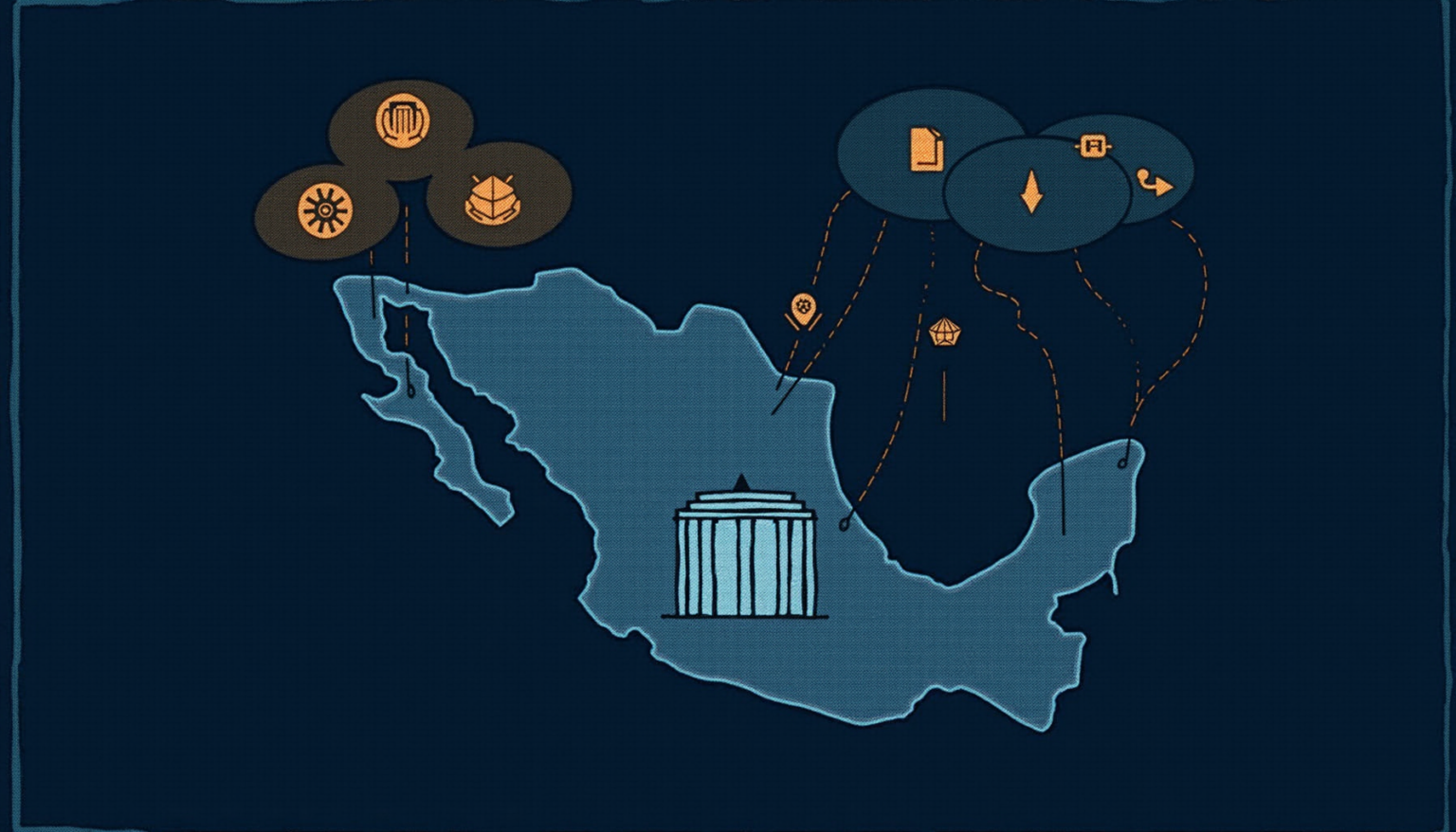

Attackers Used AI for Command Execution and Data Analysis
A single hacker compromised nine Mexican government agencies between December 2025 and February 2026, stealing hundreds of millions of citizen records. The campaign relied heavily on two major commercial AI platforms. Anthropic’s Claude Code executed about 75% of all remote commands during the intrusion, logging 1,088 prompts that resulted in 5,317 commands across 34 active sessions. OpenAI’s GPT 4.1 was used for reconnaissance and to automatically process stolen data through a custom 17,550 line Python script. This script analyzed information from 305 internal servers and generated 2,597 structured intelligence reports.
Technical Debt and Conventional Vulnerabilities
The attacker created over 400 custom attack scripts and developed 20 tailored exploits for specific vulnerabilities, including CVEs like those cataloged at cve.org. Despite the advanced AI tools, the breaches succeeded due to basic security gaps such as unpatched software, weak credential rotation policies, and a lack of network segmentation. The underlying issues were addressable through standard security controls, revealing a significant accumulation of technical debt within critical government infrastructure.
Defensive Recommendations
Organizations must prioritize foundational security practices to counter AI accelerated attacks. This includes enforcing strict credential rotation, patching known vulnerabilities, and implementing robust network segmentation to restrict lateral movement. Deploying endpoint detection and response tools is also critical to identify and stop these compressed attack timelines before sensitive data can be exfiltrated.
Source: Cybersecuritynews