
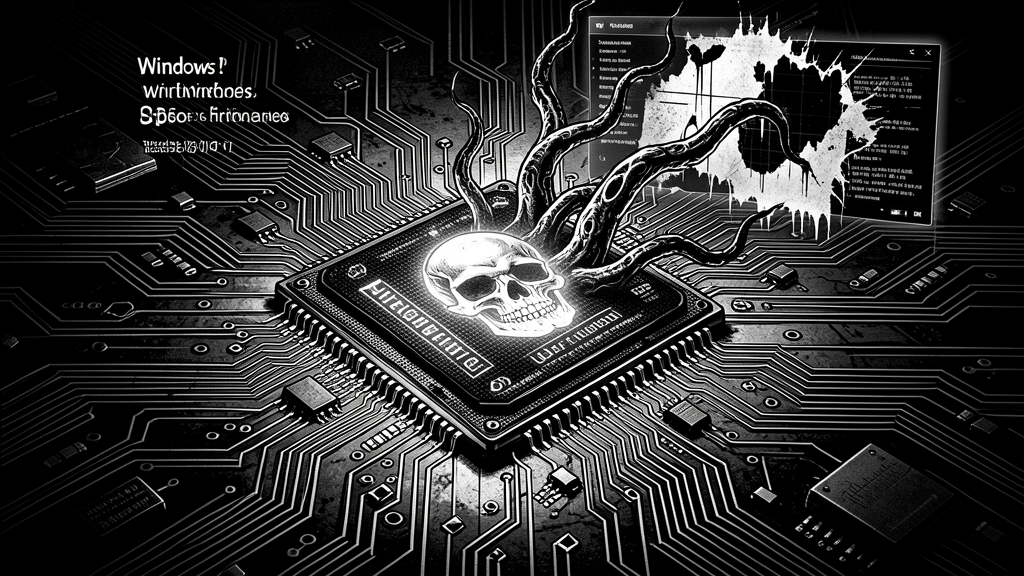

Security researchers have uncovered a sophisticated UEFI bootkit called DarkBoot that achieves kernel-level persistence on Windows systems, operating below the operating system layer to evade detection by traditional security tools.
Discovered by researchers analyzing firmware-level infections, DarkBoot injects malicious code into the Windows kernel during the boot process, before the operating system loads. This technique allows the bootkit to survive operating system reinstalls, disk replacements, and even full drive wipes, making remediation extremely difficult.
How DarkBoot Works
The bootkit compromises the UEFI firmware on the motherboard, modifying the boot chain before Windows Boot Manager executes. By hooking into the Windows boot process at the firmware level, DarkBoot loads its payload into the kernel address space before security products have a chance to initialize.
Traditional antivirus and endpoint detection and response (EDR) tools run within the operating system and cannot inspect code that loads before them. DarkBoot exploits this blind spot to establish persistence that is invisible from the OS layer.
Persistence and Detection Challenges
The bootkit’s placement in UEFI firmware means it survives the most aggressive remediation steps. Security teams that reinstall the operating system or replace the boot drive will still find the infection present after reboot, because the malicious code resides in the motherboard’s firmware storage.
Organizations must verify UEFI firmware integrity through hardware-level attestation, monitor for unauthorized firmware modifications, and ensure Secure Boot is properly configured. Flashing clean firmware to the UEFI chip is currently the only reliable removal method.
Recommendations
- Enable and properly configure UEFI Secure Boot on all Windows systems
- Use hardware-based attestation tools to verify firmware integrity
- Monitor UEFI firmware event logs for unauthorized modifications
- Restrict physical access to systems to prevent firmware-level attacks
- Implement BIOS/UEFI password protection on critical systems
- Apply vendor firmware updates and security patches promptly
The discovery of DarkBoot underscores the growing sophistication of firmware-level threats. As bootkits become more prevalent, organizations must extend their security monitoring below the operating system to detect and respond to threats at the firmware layer.