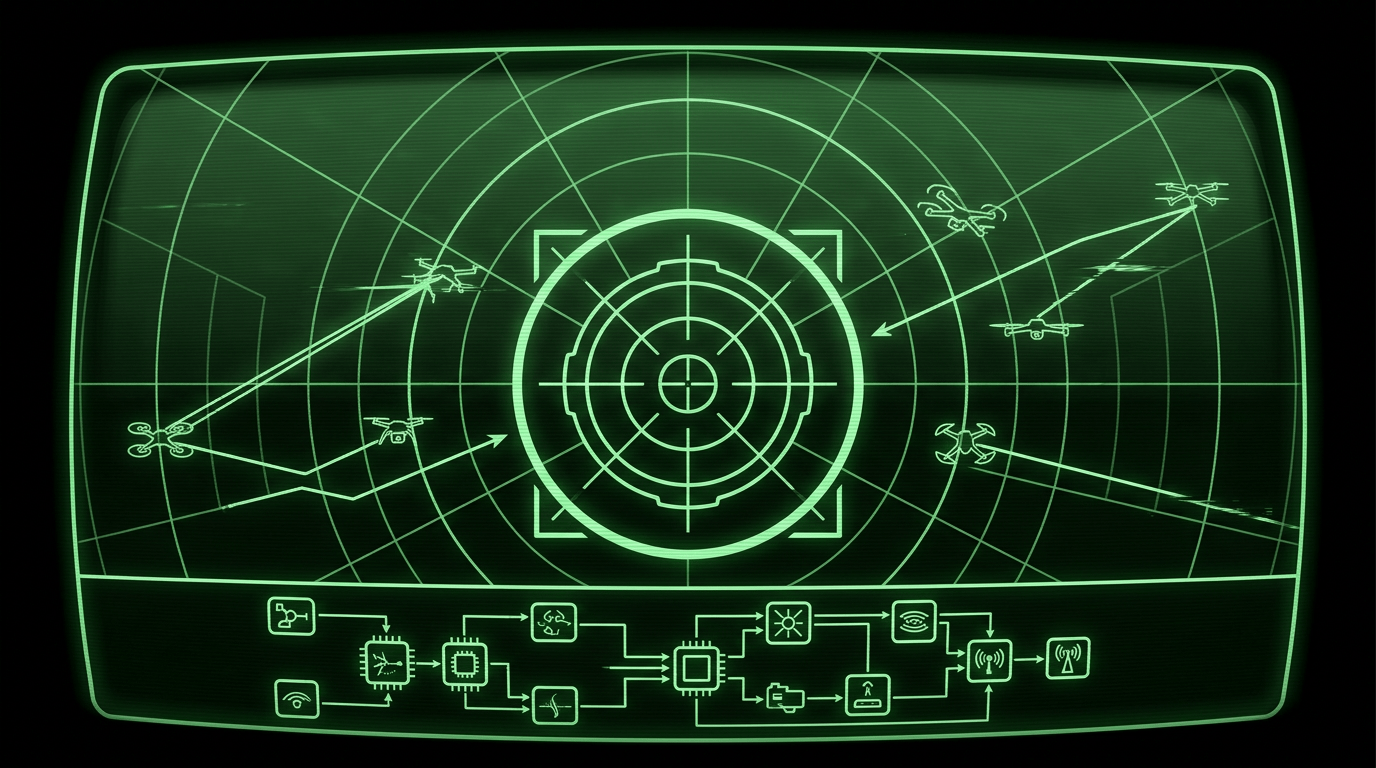

Surtr Defense, a portfolio company of Robinhood Ventures Fund II, builds a hardware-agnostic operating system for drone defense, and the startup sits in a fund cohort that treats counter-UAS as core security infrastructure. RVII lists on the New York Stock Exchange on Aug 13, and the prospectus groups Surtr alongside identity verification and AI runtime protection companies. The company describes its product as a command layer that abstracts the hardware underneath, so defenders can mix vendors freely.
The security problem is operational. Small drones have become a cheap reconnaissance and attack platform for criminals and state actors, and defending against them usually means assembling sensors, radars, and effectors from different vendors. Surtr’s OS is designed to run detection and countermeasure workflows across that mix without locking operators into a single platform, which matters for airports, critical infrastructure, and event perimeters where threats arrive without warning.
Hardware-agnostic is the differentiator. Counter-drone technology has a fragmentation problem: jammers, RF detectors, and optical trackers each ship with proprietary consoles, and integrating them is slow. An OS layer that standardizes the workflow lets defenders swap hardware as threats evolve instead of rebuilding their command chain every cycle. Federal and commercial buyers both face a counter-drone market crowded with single-purpose boxes, and an operating layer that ties them together is the consolidation play.
The fund’s thesis on Surtr is that airspace security becomes a software problem before it becomes a hardware problem. For security buyers, the bet is that the winning counter-drone vendors will be the ones that manage the mix, not the ones that sell a single box, and RVII’s backing gives Surtr a running start at that position.