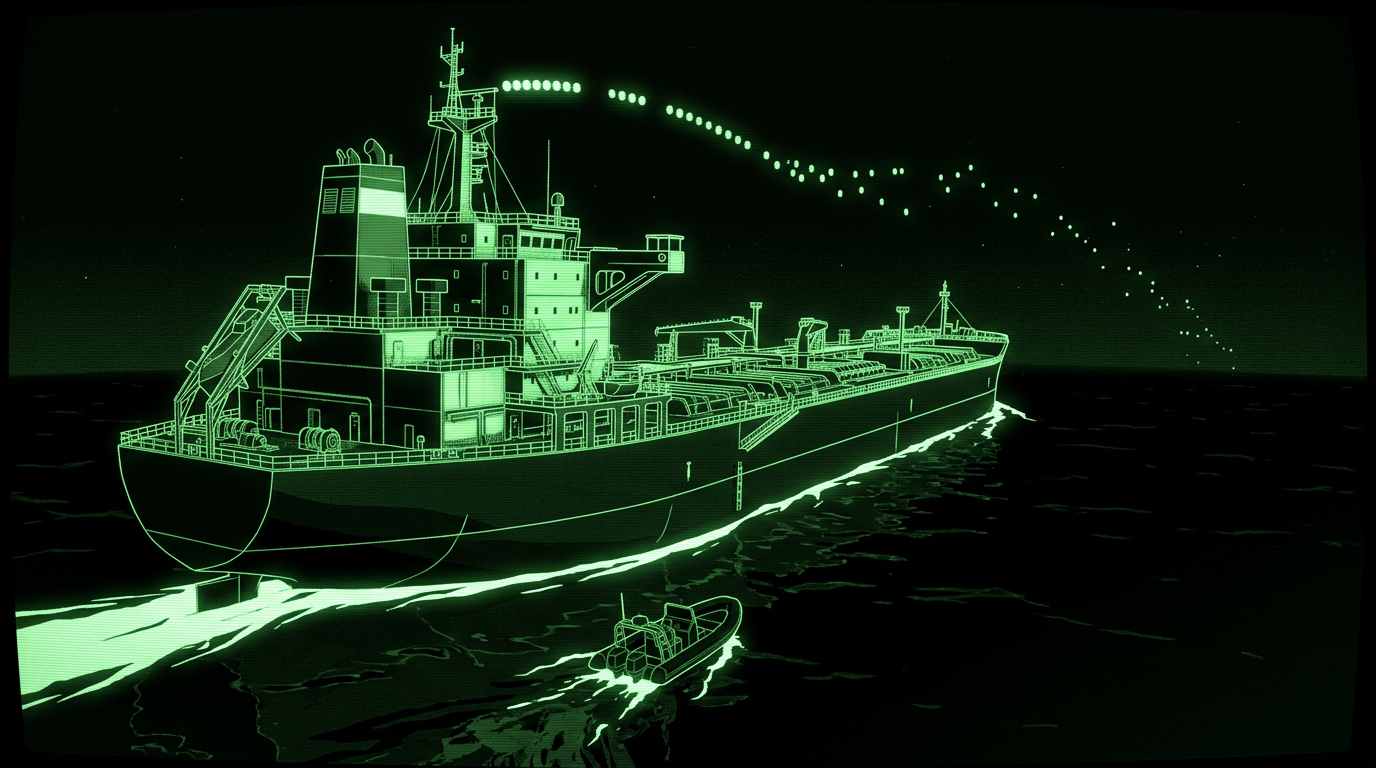

Cyberattacks, not smuggling, put federal officers aboard two tankers last month. Coast Guard teams and FBI agents went onto the ships while they were headed for Texas, after intrusions struck them at sea, US officials said.
The larger of the two is the VL Prosperity. The Liberian-flagged crude carrier measures 1,093 feet and was bound for Galveston, Texas. Iranian state media named the vessel within days and claimed intruders had reached propulsion, navigation and cargo systems, cutting communications for about 30 hours.
No US agency has publicly blamed a state. Rear Adm. Amy Grable leads Coast Guard Cyber Command, and she told CBS News that assessors went through the vessels’ onboard information technology before finding malicious activity. She named no actor.
Her framing carries the real lesson. Ships this connected are open to attack, and the fallout does not stay on board. A compromised bridge or cargo system, in her words, could leave a vessel blocking a waterway or a port, which turns a single intrusion into a trade problem.
Navigation, propulsion monitoring, cargo control and satellite links now ride networks that share hardware and connectivity. That convergence is what lets a remote intruder step from an office network or a vendor connection into systems that steer a 1,000-foot ship.
Operators get a familiar list: split operational technology from business networks, map what satellite links expose, and rehearse what the bridge does when navigation or communications start behaving like someone else is in control.